
3-O Ethyl Ascorbic Acid in Skin Care: How It Works & Why It’s Revolutionary

Introduction
Vitamin C has always been one of the most powerful and beloved skincare ingredients. However, traditional Vitamin C (L-ascorbic acid) comes with problems—instability, oxidation, irritation, and short shelf life. This is where 3-O Ethyl Ascorbic Acid steps in as a revolutionary, stable, and highly effective Vitamin C derivative. Over the last few years, ethyl ascorbic acid has transformed the skincare industry by combining the power of pure Vitamin C with modern-day skin science.
Today, dermatologists, skincare scientists, and beauty experts regard 3-O ethyl ascorbic acid as the future of brightening, anti-aging, and pigmentation correction. It penetrates deeper, stays stable longer, and delivers real results without the irritation that often comes with traditional Vitamin C.
This complete guide explores how 3-O ethyl ascorbic acid works, why it’s superior, who should use it, its powerful benefits, and how to add it to a daily skincare routine. We will also highlight why a vitamin C serum with 3-O ethyl ascorbic acid, such as PUREFORMA Vitamin C Face Serum, is one of the best ways to experience its full potential.
Table of Contents
- What is Ethyl Ascorbic Acid?
- What Is 3-O Ethyl Ascorbic Acid?
- Why Do We Use Vitamin C Derivatives in Skincare?
- How 3-O Ethyl Ascorbic Acid Works
- 3-O Ethyl Ascorbic Acid vs Pure Vitamin C
- 3-O Ethyl Ascorbic Acid Skin Benefits
- Who Should Use It?
- How to Use It in a Routine
- What Not to Combine It With
- Best 3-O Ethyl Ascorbic Acid Products to Look For
- Why Choose a Vitamin C Serum with 3-O Ethyl Ascorbic Acid
- Conclusion
- FAQs
What is Ethyl Ascorbic Acid?
Ethyl ascorbic acid is a highly stable, advanced form of Vitamin C created by modifying pure ascorbic acid with an “ethyl” group. This modification increases its stability, enhances penetration, and allows it to stay effective on the skin longer.
Traditional Vitamin C oxidizes quickly when exposed to air, heat, or light. But ethyl ascorbic acid resists oxidation, making it one of the safest and most reliable Vitamin C derivatives for daily use.
What Is 3-O Ethyl Ascorbic Acid?
Scientific Definition
3-O Ethyl Ascorbic Acid is an advanced Vitamin C derivative where an ethyl group is attached to the third carbon (C3) position of ascorbic acid. This structural modification preserves the potency of Vitamin C while significantly improving stability and skin penetration.
Because of its unique structure, 3-O ethyl ascorbic acid remains active longer and converts into pure Vitamin C inside the skin, ensuring maximum benefits.
How It Differs from L-Ascorbic Acid
L-ascorbic acid is the pure form of Vitamin C, but it is unstable, easily oxidizes, and can irritate the skin.
3-O ethyl ascorbic acid, on the other hand:
- Does not oxidize quickly
- Is safe for all skin types
- Penetrates deeper into the dermis
- Causes less irritation
- Works at gentle pH levels
Molecular Structure and Stability
The ethyl group attached to Vitamin C makes ethyl ascorbic acid both water-soluble and oil-soluble (amphiphilic). This dual-solubility allows it to pass through the skin barrier with ease—something pure Vitamin C struggles with.
Why Ethyl Ascorbic Acid Matters
The added ethyl group makes this form:
- More stable
- More bioavailable
- More effective
- Better absorbed
This stability is the main reason 3-O ethyl ascorbic acid in skin care has become mainstream.
Comparison with Other Vitamin C Derivatives
L-Ascorbic Acid
- Most potent but highly unstable
- Irritating on sensitive skin
- Requires very low pH
Sodium Ascorbyl Phosphate (SAP)
- Stable but less potent
- Mostly used for acne-prone skin
Magnesium Ascorbyl Phosphate (MAP)
- Very gentle but mildly effective
- Used in sensitive skin formulas
Ascorbyl Glucoside
- Stable but converts slowly into active Vitamin C
- Works for mild brightening
Why 3-O Ethyl Ascorbic Acid Outperforms Them
- Better penetration
- Stronger brightening
- Faster pigmentation correction
- Higher stability
- Lower irritation
- Suitable for all skin types
This is why modern 3-O ethyl ascorbic acid products are rapidly replacing older Vitamin C formulations.
Why Do We Use Vitamin C Derivatives in Skincare?
While pure Vitamin C is powerful, it is highly unstable. It breaks down when exposed to oxygen or light, loses potency, and can irritate the skin.
Vitamin C derivatives like 3-O ethyl ascorbic acid:
- Are more stable
- Deliver Vitamin C benefits without irritation
- Penetrate deeper
- Work in a wider pH range
- Stay effective longer
This makes Vitamin C easier to use daily—even for sensitive or acne-prone skin.
How 3-O Ethyl Ascorbic Acid Works on the Skin
1. Deeper Skin Penetration
Because ethyl ascorbic acid is both lipophilic (oil-loving) and hydrophilic (water-loving), it easily passes through the skin barrier. It reaches the deeper layers where collagen is formed.
This dual action makes a 3-O ethyl ascorbic acid serum far more effective than many other Vitamin C forms.
2. Slow & Controlled Release
Once absorbed, 3-O ethyl ascorbic acid converts slowly into active Vitamin C.
Benefits of controlled release:
- Continuous brightening
- Reduced irritation
- Better long-term results
- Strong antioxidant effects
3. Antioxidant Action
Vitamin C is one of the strongest antioxidants.
3-O ethyl ascorbic acid neutralizes:
- Free radicals
- Pollution damage
- UV damage
- Environmental stress
This protects the skin from premature aging.
4. Tyrosinase Inhibition (Brightening)
It blocks tyrosinase—the enzyme responsible for melanin production.
This means 3-O ethyl ascorbic acid for skin helps:
- Reduce pigmentation
- Correct dark spots
- Brighten dull skin
- Even skin tone
5. Collagen Stimulation
Vitamin C is essential for collagen synthesis.
3-O ethyl ascorbic acid boosts:
- Firmness
- Elasticity
- Smoothness
This leads to fewer fine lines and wrinkles.
3-O Ethyl Ascorbic Acid vs Pure Vitamin C (L-Ascorbic Acid)
Feature
L-Ascorbic Acid
3-O Ethyl Ascorbic Acid
Stability
Very low
Extremely high
Oxidation
Oxidizes quickly
Oxidation-resistant
pH Requirement
Very low (acidic)
Works in mild pH
Irritation
High
Low
Shelf Life
Short
Long
Suitability
Not for sensitive skin
All skin types
Penetration
Limited
Deep & efficient
This makes 3-O ethyl ascorbic acid the best form of Vitamin C for modern skincare.
3-O Ethyl Ascorbic Acid Skin Benefits
1. Brightening & Even Skin Tone
It reduces dullness and revives glow.
2. Reduction in Hyperpigmentation
A vitamin C serum with 3-O ethyl ascorbic acid helps fade:
- Dark spots
- Sun spots
- Post-acne marks
3. Anti-Aging Benefits
Boosts collagen production, reduces wrinkles, and improves skin texture.
4. Strong Antioxidant Protection
Shields the skin from UV and pollution damage.
5. Healthy Glow
Skin looks fresh, luminous, and revitalized.
6. Works Well With Other Actives
Pairs well with:
- Niacinamide
- Hyaluronic acid
- Ceramides
This makes 3-O ethyl ascorbic acid products versatile and easy to add to any routine.
Who Should Use 3-O Ethyl Ascorbic Acid?
Suitable Skin Types
- Dry
- Oily
- Combination
- Sensitive
- Acne-prone
- Mature
Skin Concerns It Helps With
- Pigmentation
- Tan removal
- Acne scars
- Uneven skin tone
- Dullness
- Fine lines and wrinkles
Because of its stability and gentleness, 3-O ethyl ascorbic acid in skin care is ideal for both beginners and advanced skincare users.
How to Use 3-O Ethyl Ascorbic Acid in Your Routine
Ideal Concentration
10%–20% for best results.
When to Apply
- AM for brightening + antioxidant protection
- PM for skin repair
Layering Guide
With Niacinamide
Safe and effective together.
With Hyaluronic Acid
Helps hydrate and plump the skin.
With Retinol
Use retinol at night and Vitamin C in the morning.
Sensitive skin should avoid layering them together.
With Sunscreen
Sunscreen is a MUST when using Vitamin C.
This boosts protection and prevents pigmentation.
What Not to Combine It With
- High-strength AHA/BHA exfoliants
- Strong retinol (for sensitive skin)
- Benzoyl peroxide (may reduce effectiveness)
Always patch test when trying new skincare combinations.
Best 3-O Ethyl Ascorbic Acid Products to Look For
Look for:
- 10%–20% concentration
- Lightweight texture
- Minimal irritants
- Stable formulation
- Water + oil soluble formula
The best 3-O ethyl ascorbic acid serum is one that offers stability, hydration, and real visible results.
Why Choose a Vitamin C Serum with 3-O Ethyl Ascorbic Acid?
A vitamin C serum with 3-O ethyl ascorbic acid offers:
- Better absorption
- Faster brightening
- Stronger pigmentation control
- Less irritation
- Longer shelf life
This makes it a superior choice compared to most Vitamin C variants.
Conclusion
3-O Ethyl Ascorbic Acid is not just another skincare trend—it’s a breakthrough in Vitamin C technology. With its remarkable stability, deep penetration, antioxidant strength, and collagen-boosting power, it delivers exceptional results for pigmentation, dullness, aging, and overall skin health.
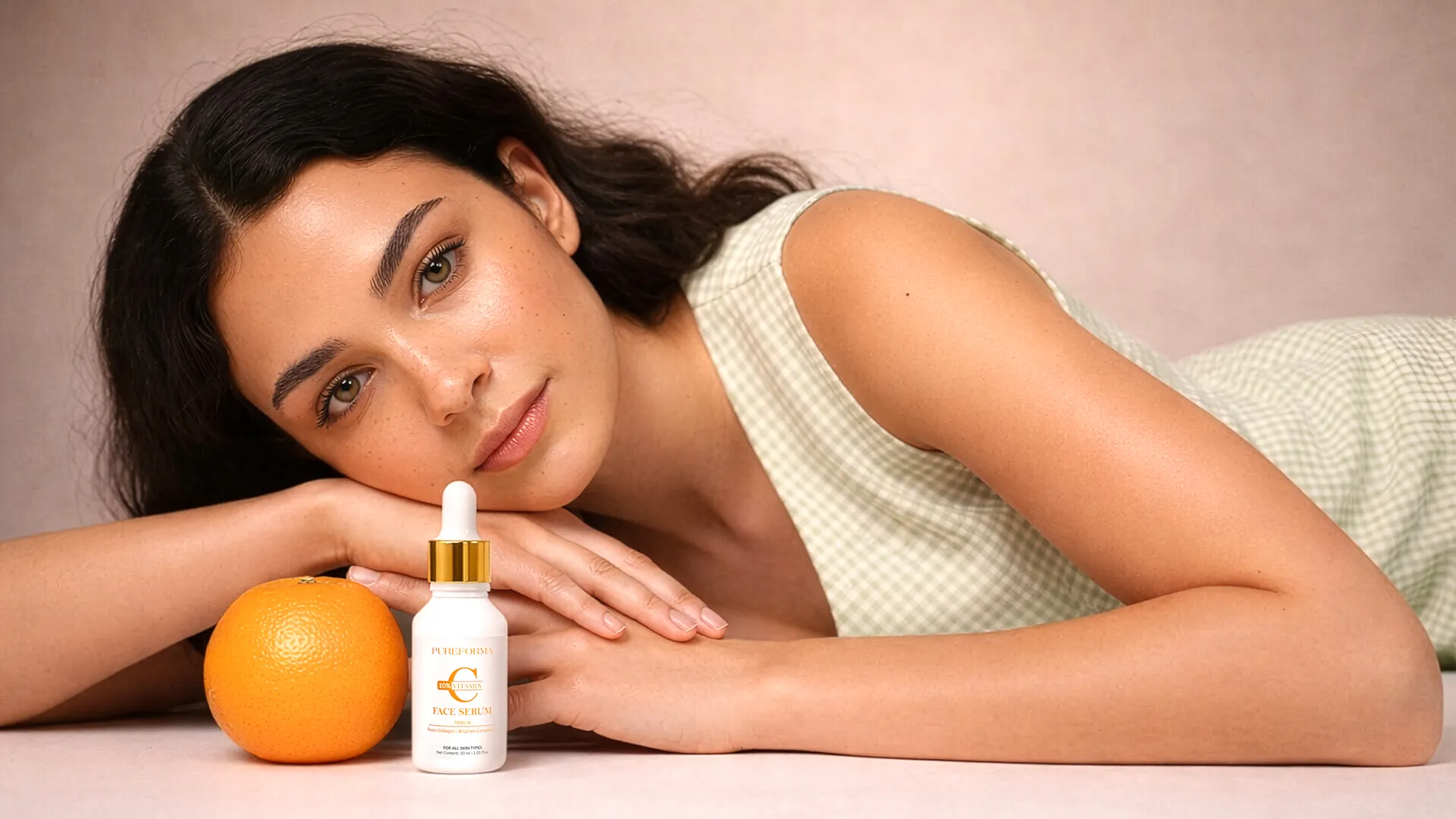
If you're looking for a high-quality Vitamin C serum powered by 3-O Ethyl Ascorbic Acid, PUREFORMA 10% Vitamin C Face Serum is an excellent choice.
Available at www.pureforma.in, this serum is:
- Lightweight
- Fast-absorbing
- Dermatologist tested
- Suitable for daily AM–PM use
- Ideal for brightening and fading dark spots
Why You’ll Love PUREFORMA 10% Vitamin C Serum
- Even skin tone
- Anti-aging support
- Deep hydration
- Glowing complexion
- Clean, cruelty-free, and safe formula
PUREFORMA products are clean, safe, dermatologist tested, paraben-free, sulphate-free, cruelty-free, and free from harsh chemicals—skincare you can trust.
FAQs
1. Is 3-O Ethyl Ascorbic Acid better than Vitamin C?
Yes. It is more stable, less irritating, and penetrates deeper than pure Vitamin C.
2. Does it lighten or brighten skin?
Yes. It brightens dull skin, reduces pigmentation, and evens skin tone.
3. Can beginners use it daily?
Absolutely. It’s gentle and suitable for daily AM–PM use.
4. Is it safe for acne-prone skin?
Yes. It is non-comedogenic and helps reduce post-acne marks.

.svg)
.svg)